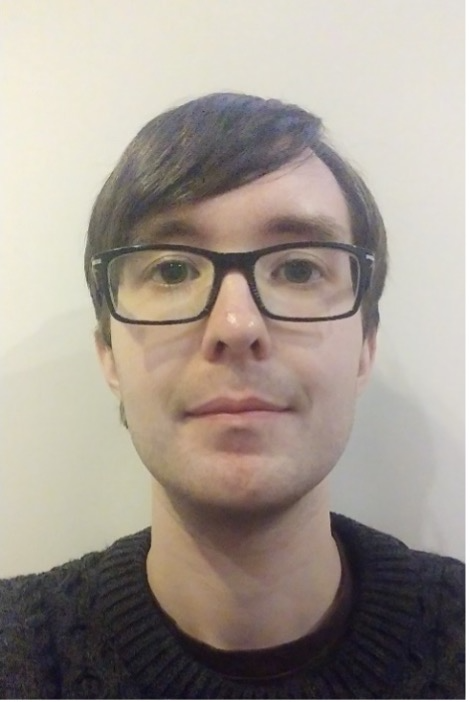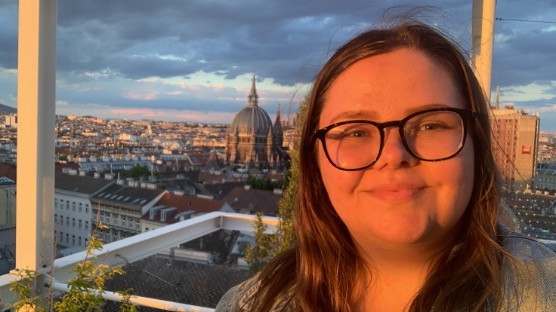

Celebrating our students: Spotlight on Charlie Hook (MI ‘23)

Charlie Hook is a second-year Master of Information student at SIM. Charlie was recently accepted to a doctoral program at the University of Leicester. In this spotlight we learn about Charlie’s doctoral project and what she is most looking forward to as she continues her studies at a new university. Congratulations on this incredible accomplishment, Charlie. This is important and valuable work, and we wish you all the best as you embark on your degree.

Tell us about the program you applied to and why you were attracted to the University of Leicester?

I found out about this doctoral opportunity through Twitter! The University of Leicester’s School of Museum Studies was looking to award two fee waivers to students looking to pursue doctoral studies in their program in specific fields, one of which was human remains in the museum! I only had about six weeks left to apply when I found out! 

I first became attracted to the subject of human remains in the museum while putting together an exhibit on women’s health in Victorian Leeds during my MA in Curating Science at the University of Leeds. During archival research, I became aware of a tumour that was removed from a female patient and then donated to the Leeds Medical School. When I inquired about it with my supervisor, he informed me that although there was a possibility that the school still had the tumour in their possession, it would be impossible to get access to it because of the laws that governed the care of human remains in the UK. I started designing my PhD project a few months later, but never finalised my application due to the start of Covid.

This specific opportunity is particularly special, partly because the fee waiver means that I do not have to worry about paying exorbitant international fees, but also because my supervisor is one of the few experts on human remains in the museum that is still teaching in the UK. Leicester also boasts the only dedicated museum studies school in England, so it is a natural fit for my studies.

What is your proposed doctoral project?

My proposed doctoral studies are on the provenance of colonial human remains in the museum. Currently, the Department of Culture, Media and Sport’s Guidance on the Care of Human Remains states that the provenance of human remains should not play an important role in determining the outcome of requests for the return of human remains to their community of origin; instead, the outcome should be decided based on a prove-able association between the remains and the community making the request, and the spiritual or cultural importance of the remains to the community. However, remains that were acquired by individuals and institutions during the period of British colonial expansion from overseas territories were usually acquired through theft, or trade where an imbalance of power was present between the giver and the recipient. My research will study the provenance of certain colonial human remains in British institutions through archival research, and hopefully, interviews with the community of origin in order to ascertain the means of acquisition of the remains. My hypothesis is that my findings will confirm that these remains were acquired through unethical or illegal means, which would diminish the institution’s claim over the remain, and therefore mandate or encourage the return of said remains to their community of origin.

What are you most excited for?

The first year of my degree is the literature review year, so I’ll be doing a lot of secondary research at first, before passing an examination that would confirm the feasibility of my research and officially make me a PhD candidate. The real fun will start in my second year, when I’ll be able to start archival research and interviews with communities. It will be very important for me to balance archival research, which represents a Western point of view, with the research I’ll be conducting with the communities of origin, which will likely include other Ways of Knowing. Creating relationships of trust with those communities will be difficult, but I’m looking forward to the challenge and the opportunity to help bring their voices to light, and hopefully bring their ancestors home.

How do you feel the MI prepared you to move into a research-intensive degree?

I benefited tremendously from some of the courses that I took with Dr. Jamila Ghaddar in the first year of my degree, where I was able to further explore my interests in human remains and the policies and legislations that relate to them. Dr. Ghaddar uses an intersectional approach to her teaching that really helped widen my horizons and teach me about all the parties with stakes in human remains present in the museum. The opportunity to pursue a reading course over the summer and fall turn also allowed me to dive into the subject, and perform much of the research that went into my proposal. Research Methods also proved invaluable in teaching me to write a research proposal in the first place, which was obviously key in putting one together in such a short period of time. 
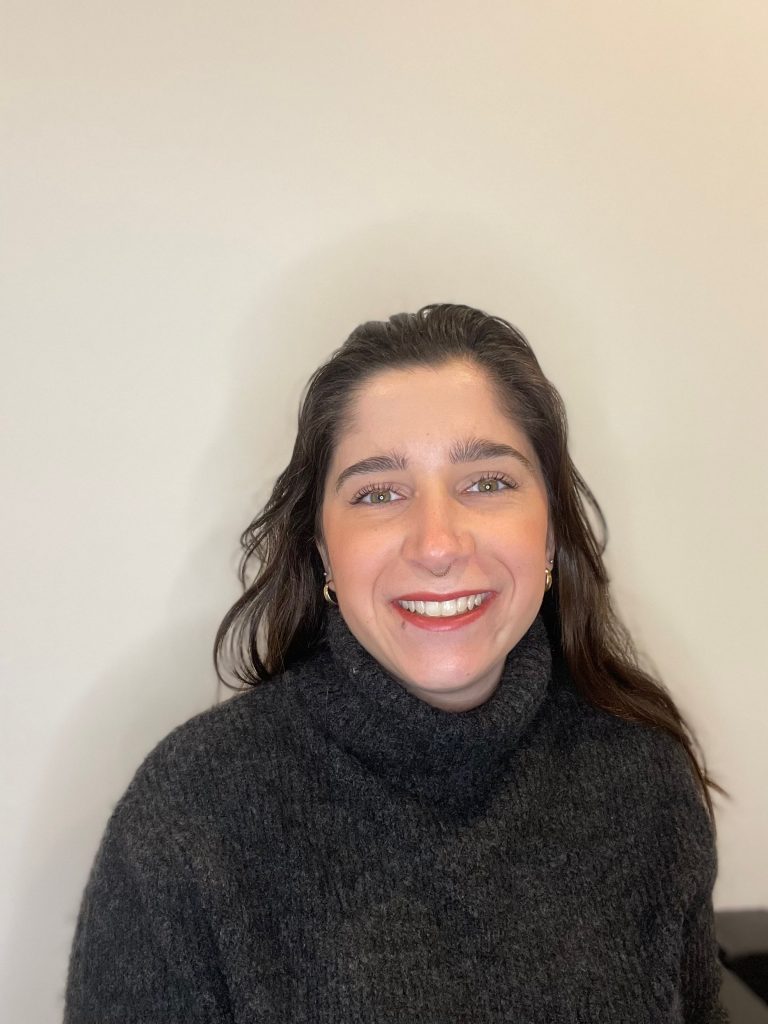
March First-Year Student Spotlight: Keith Macknight

Our First-Year Student Spotlight for the month of March highlights Keith Macknight! Keith talks about his experience in the Master of Information program so far and his evolving interests. Your insights are compelling indeed, Keith! Thanks for sharing a bit about yourself.

Tell us a bit about yourself! (Name, where you are from, and what brought you to this program)

My name is Keith Macknight, and I am from St. Andrews in New Brunswick, just on the other side of the Bay of Fundy from Nova Scotia. I came into this program after working at my local archives, the Charlotte County Archives, during the early years of the Covid-19 pandemic and deciding that I wanted to move further in that field. I enjoy living a quiet life, and I try to find time to play old video games when I’m not too busy with course work. 

What is your favourite thing about SIM so far?

Our course lectures and assignments have afforded us many opportunities to discuss and examine topics which feel socially relevant, such as privacy on social media or social justice topics. My academic background is in archaeology and history, and I often felt during my undergrad that I was in a sort of “bubble” that was separate from everything else going on in the world. I don’t feel that way at all in the SIM program, and I find myself to be a lot more compelled with our work because of it. 

What about Information Management interests you the most? What are you looking forward to learning more about?

I want to learn more about online databases, in particular how best to structure them to make sure they are easy to use and accessible for the general public. Online databases have a lot of potential for making the information kept in archives and libraries more widely available, but if they aren’t structured well that would seriously diminish their usefulness. I’ve also become interested in topics related to data privacy and the potential of social media as a source of information, data, and many headaches. 

March First-Year Student Spotlight: Keith Macknight

Our First-Year Student Spotlight for the month of March highlights Keith Macknight! Keith talks about his experience in the Master of Information program so far and his evolving interests. Your insights are compelling indeed, Keith! Thanks for sharing a bit about yourself.

Tell us a bit about yourself! (Name, where you are from, and what brought you to this program)

My name is Keith Macknight, and I am from St. Andrews in New Brunswick, just on the other side of the Bay of Fundy from Nova Scotia. I came into this program after working at my local archives, the Charlotte County Archives, during the early years of the Covid-19 pandemic and deciding that I wanted to move further in that field. I enjoy living a quiet life, and I try to find time to play old video games when I’m not too busy with course work. 

What is your favourite thing about SIM so far?

Our course lectures and assignments have afforded us many opportunities to discuss and examine topics which feel socially relevant, such as privacy on social media or social justice topics. My academic background is in archaeology and history, and I often felt during my undergrad that I was in a sort of “bubble” that was separate from everything else going on in the world. I don’t feel that way at all in the SIM program, and I find myself to be a lot more compelled with our work because of it. 

What about Information Management interests you the most? What are you looking forward to learning more about?

I want to learn more about online databases, in particular how best to structure them to make sure they are easy to use and accessible for the general public. Online databases have a lot of potential for making the information kept in archives and libraries more widely available, but if they aren’t structured well that would seriously diminish their usefulness. I’ve also become interested in topics related to data privacy and the potential of social media as a source of information, data, and many headaches

Alumni Spotlight Series: Kydra Mayhew

Our new Alumni Spotlight Series will highlight recent SIM grads. First up we have Kydra Mayhew, 2022 graduate! Kydra shares what her experience at SIM was like as she started her degree during the Covid-19 pandemic, her new position at Mount Saint Vincent University as Engagement Librarian and instructor at SIM, and offers some advice for current students. It is wonderful to see you shine in professional settings, Kydra, and we are lucky to have you teaching out of SIM!

When did you graduate from SIM? What was your favourite class/subject of study when you were in the program and how have your interests expanded since then/how have you translated these to the workplace?

I graduated from SIM in the Spring of 2022. During my time at SIM I focused on Bibliometrics and scholarly research. I really loved taking reading courses in my areas of interest that allowed me to curate my own learning experiences and study topics that I was passionate about. During my reading courses I was able to hone my research skills at both the quantitative and qualitative levels. These courses gave me the opportunity to work on projects that I would eventually submit to conferences all over the world. 

What is your current role, how long have you been in it?

I am currently working at Mount Saint Vincent University as their Engagement Librarian – a position that I started at the beginning of 2023. In this position I am responsible for engaging with the MSVU and greater Halifax community, as well as being a liaison librarian for several different departments. In addition to this I am also a part-time instructor for SIM, I teach an undergraduate course on information networking systems.

In what ways is working as an IM professional different from the classroom? If you could go back and give your first year self one piece of advice, what would you tell them?

During my first year in the MI program we were completely online. It was isolating and difficult, and it left me worrying that I wouldn’t have the practical skills required for a job in my field. If I could go back and give myself some advice, I would tell myself that this may have seemed like a challenge at the time, but it was a fantastic learning opportunity that allowed me to gain a new set of skills that are now crucially important to have in modern workplaces; such as remote work capabilities, problem solving, online communication skills, flexibility and adaptability. My time as an online student provided me with a unique knowledge of the online learning landscape which has opened more doors for me than I ever thought it would.

Submit to SIMagination

The SIMagination Creative Journal, last published in 2014, is back and now accepting submissions for the spring 2023 issue! If inspiration strikes or you have creative works you’ve always wanted to share with others, consider submitting to SIMagination, a space to showcase your creative artwork or writing!

The deadline for submissions is Friday, March 10th. Please see the attached Call for Submissions for more details, or get in touch at simaginationcreativejournal@gmail.com

First-Year Student Spotlight: Courtney Pearce

Our February First-Year Student Spotlight features Courtney Pearce! Courtney joins SIM from Newfoundland and Labrador! She has enjoyed staying close to Atlantic Canada while expanding her horizons in Information Management. Thanks for sharing a bit about yourself, Courtney, you will make a great academic librarian!

Tell us a bit about yourself!

My name is Courtney! I’m originally from Corner Brook, Newfoundland, and Labrador but I did my undergraduate degree in St. John’s, majoring in linguistics and minoring in psychology. I knew that I wanted to go into librarianship for a while, especially after having worked at the library at my undergrad university but I chose SIM for a few reasons. Most importantly, I like that there is a focus on many areas of information management outside of librarianship through a variety of electives. The location is also a plus because I love Atlantic Canada!


What is your favourite thing about SIM so far?

While I already mentioned the variety of areas of information management that SIM allows students to explore, I also love the community SIM has to offer! Since the program is small, it is easier to not only get to know other students but also the faculty which has been a good experience so far! 

What about Information Management interests you the most? What are you looking forward to learning more about?

I am most interested in how information plays a role in all facets of society, not just in libraries and archives. In particular, I find information literacy fascinating and I want to learn more about how that can be promoted in a society that is becoming more and more dependent on information. This is something I hope to promote through a career in academic librarianship. I’m looking forward to learning more about this and other aspects of librarianship and information management during the rest of my degree!

African Heritage Month Resources

Reading Resources

Report on Lord Dalhousie’s History of Slavery and Race

A must-read for any Dalhousie Student. Anti-Black Racism is embedded into Dalhousie as an institution on a fundamental level. Written by Dr. Afua Cooper, former Halifax poet Laureate and current faculty member at the department of history and Anthropology and Sociology. 

Black Matters by Afua Cooper and Willfried Raussert

A book of photography and poetry written in collaboration by Afua Cooper and photography by Willfried Raussert. Cooper translates Rausserts photos into lyrical and rhythmic verse, discussing the Black diaspora across North America and Europe, putting the past and present into conversation with one another. We have purchased a copy that will be available in the common room to borrow!

Events this Month

African Heritage Month at Dalhousie University

The Office for Equity and Inclusion invites you to join in on Wednesday, February 1, 2023 for the launch of African Heritage Month and flag-raising at Dalhousie University. The event will begin at 11:00 am in the LeMarchant Place atrium with a brief program which will then move to the Studley Quad for the raising of the flag at approximately 11:30 am. We will alternate the flying of the Pan-African flag and African Nova Scotian flag on the Halifax and Truro campuses throughout February. For an overview of Dalhousie and community events happening during African Heritage Month 2023, visit the Human Rights & Equity Services website and/or the Black Cultural Centre website

Downtown Light Show

Throughout February, the Downtown Halifax Business Commission will project light displays on the former Halifax Memorial Library Building at Grafton Park in celebration of African Heritage Month.

Pan-African Flag on Viola Desmond Ferry

Throughout February, the Pan-African flag will be displayed on the Viola Desmond Ferry in honour of African Heritage Month. 

Virtual Museum Tours

Take an immersive tour of popular heritage and cultural sites, including the Africville Museum and the Black Cultural Centre

African Heritage Month – Calypso Celebration | DHBC

Come celebrate and learn about the heritage of Caribbean immigrants to Canada. This event offers a deep dive into the connections between jazz and afro-Caribbean music and its history here in Nova Scotia. It also offers some great tunes! 

Date: Thursday, February 2, 2023

Time: 7:00 p.m.

Location: In-Person and On-Line

Language: Presented in English

Cost: FREE

Lift Every Voice

A showcase of exceptional talent from our African Nova Scotian music community, produced by the African Nova Scotian Music Association. A favourite in Halifax, and a lot of fun. Uplifting, celebratory and engaging. 

Date: Thursday, February 16, 2023 

Time: 6:00 PM – 8:00PM

Location: Halifax North Memorial Public Library 

The NFB in Libraries- African Heritage Month 

A selection of films and documentaries from the National Film Board of Canada. Every Friday morning throughout the month of February; the public library will be screening eye-opening and provoking films to celebrate African Heritage Month. You can chat about the movie afterwards while enjoying some snacks!

Date: Every Friday in February starting February 3rd

Time: 10:00 am- 12:00pm

Location: Captain William Spry Public Library

February 3rd: Sol 

Many Black, racialized, and immigrant women work with elderly patients as healthcare providers. Their jobs, already arduous and underpaid as it is, have become even more exhausting during the COVID-19 pandemic. While some public commentators have described them as over-represented in this sector because of their culture, and hailed them as “guardian angels,” what do they themselves have to say? This cross-sectional portrait of some of these women takes the form of a meditative essay.

February 10th Zab Maboungou 

This portrait of choreographer Zab Maboungou provides insight into the meticulous training and physical strength behind one of her pivotal works: Mozongi.

February 17th Black Soul

Martine Chartrand’s animated short dives into the heart of Black culture with an exhilarating trip through history. Watch as a young boy traces his roots through the stories his grandmother shares with him about the events that shaped their cultural heritage.

February 24th: Ice Breakers

Josh Crooks is a promising teen hockey star in a sport where Black players like him are chronically underrepresented. Ice Breakers reveals the buried history of a pioneering Black hockey league in Atlantic Canada, as Crooks discovers that his unshakable passion is tied to a rich and remarkable heritage